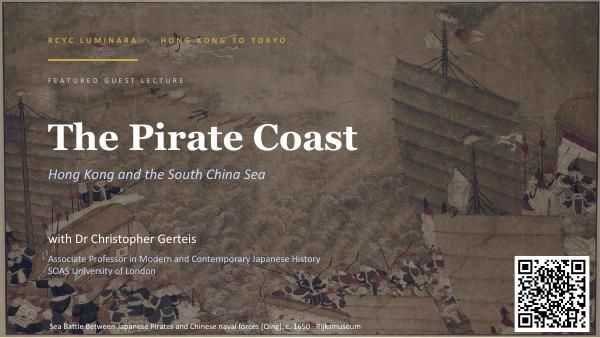
12 April 2026 · Lecture 01The Pirate Coast
Hong Kong and the South China Sea
Cultural Navigators gives guests and crews an accurate, accessible cultural history of the ports they visit. Enrichment lectures and destination research for luxury small-ship operators in Japan, Korea, Taiwan and the China coast, with every substantive claim checked against a named source and the checking published.
A complete programme delivered aboard RCYC Luminara, Hong Kong to Tokyo, April 2026 — slides and guest companion guides, published in full under an open licence.
Japan, Korea, Taiwan, Hong Kong and the coastal Chinese ports. Nothing outside East Asia, at any price.
A verification appendix ships with the guest material. Claims that cannot be checked to standard are kept out and listed as such.
Each is bought by a different function, and each draws on the same underlying research.
Thirty-minute talks built to the operator's visual register, scripted and rehearsed, with a guest companion guide for each.
Port files, route themes, seasonal sensitivity registers and named regional partners, for product development and voyage design.
The same material cut short and retrievable, for onboard operations and fleet training — including what to say when a guest asks the hard question.
Pre-departure series, in-suite companion, per-port briefs and printed programme copy, for CRM and marketing. A delivered example is below.
One itinerary, read end to end against the regional record. It is deliberately small, so you can see the quality of the work before committing a season to it.
Fixed fee, agreed before work begins. Dated delivery. If it is useful, the lecture programme and guest material follow from it; if it is not, you have spent one fee and lost nothing.
Five thirty-minute talks on alternating sea days, each with a guest companion guide, delivered aboard the Ritz-Carlton Yacht Collection's Luminara in April 2026. The whole series is published — the decks as delivered, the guides as guests received them.
Hong Kong and the South China Sea
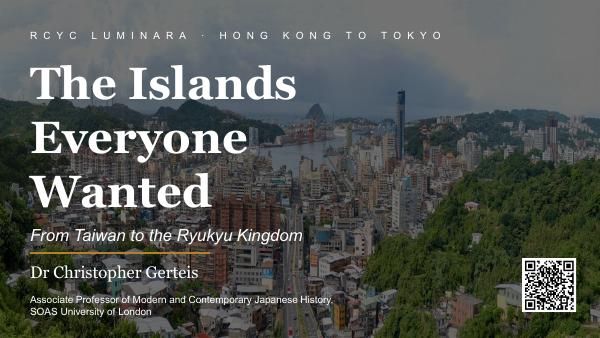
From Taiwan to the Fuzhou trade and the Ryūkyū Kingdom

When samurai came for the sugar
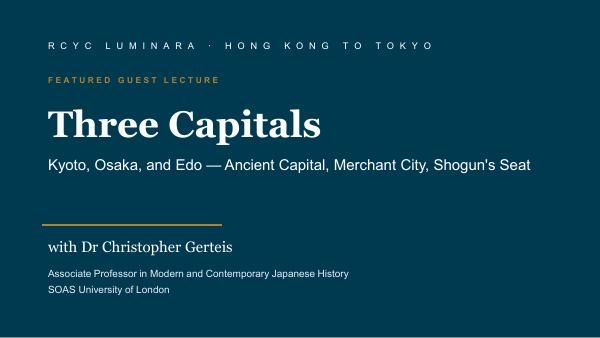
Kyoto, Osaka and Edo — ancient capital, merchant city, shogun's seat
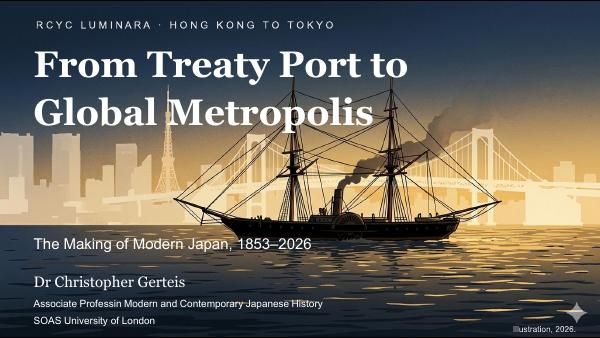
The making of modern Japan, 1853–2026
Published openly. Every item above is released under the Creative Commons Attribution-ShareAlike 4.0 licence. An operator can read the entire programme, circulate it internally, and adapt it under the same terms, before commissioning anything.
An operator buying enrichment is usually buying a biography and a promise. Here the deliverable is on the table before the conversation starts. The wider archive — syllabi, essays and serialised chapters — sits in the Reading Room.
The guest-facing web companion built for two East Asian voyages sailed in March and April 2026 — a page for every call and a page for every day at sea, written to be read in a suite or on a phone. It stands as the record of those voyages, and as the working example of what this line of work produces.
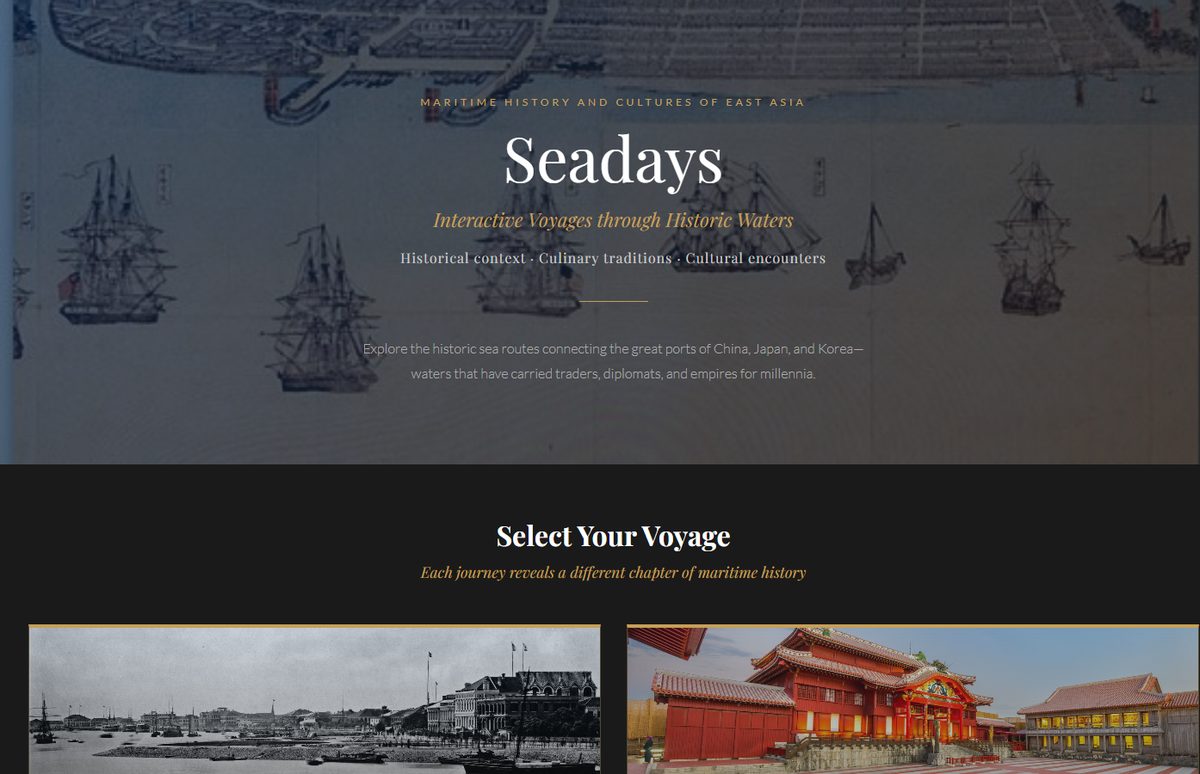
Tokyo to Hong Kong through Nagasaki, Incheon and Shanghai in March; Hong Kong to Tokyo through the Ryūkyū arc in April — the same April sailing whose five lectures are published above. The talks carried the argument in the room; Seadays carried it for the rest of the voyage.
Forty-four pages, no frameworks and no login, built to load on a ship's wi-fi. This is what the fourth line of work looks like finished rather than described.
Dr Christopher Gerteis, Associate Professor of Modern and Contemporary Japanese History, SOAS University of London.
Creator and Co-General Editor, Cultural History of East Asia — six volumes, Bloomsbury Academic, spanning three and a half thousand years.
The Hashima XR Project — historians, software designers and heritage researchers in Japan and the United Kingdom, documenting a contested industrial site in extended reality.
Japan, including the Ryūkyū and Amami chains, Hokkaidō and the Inland Sea · South Korea · Taiwan · Hong Kong · the coastal Chinese ports on Northeast Asian routes.
Nothing outside East Asia. No Pacific, no Southeast Asia, no South Asia, no Australasia.
Tell me the itinerary and the season. A first reply usually comes within two working days, and the useful first conversation is twenty minutes about one route.